Brush Cutter vs Grass Trimmer: Complete Yard Care Guide
Brush Cutter vs Grass Trimmer: Complete Yard Care Guide
Maintaining a clean, manicured lawn requires understanding the specific equipment designed for different vegetation types. Homeowners often struggle to choose between a brush cutter and a grass trimmer when tackling dense weeds, overgrown lawns, or precise edge work. While both devices serve trimming functions, their internal mechanics, power outputs, and cutting mechanisms differ significantly.
Understanding Yard Maintenance Tools
Selecting the ideal outdoor tool starts with recognizing what each machine is engineered to handle. Using a light string trimmer on heavy brush can break internal components or snap line repeatedly. Conversely, operating a heavy industrial cutter for delicate grass edging can damage surrounding garden beds or turf.
What Is a Grass String Trimmer?
A grass string trimmer uses a flexible monofilament line spinning at high speeds to slice through light vegetation. It excels at delicate tasks such as trimming around fence posts, flower beds, and garden borders. Traditional string trimmers prioritize precision and maneuverability over heavy cutting force.
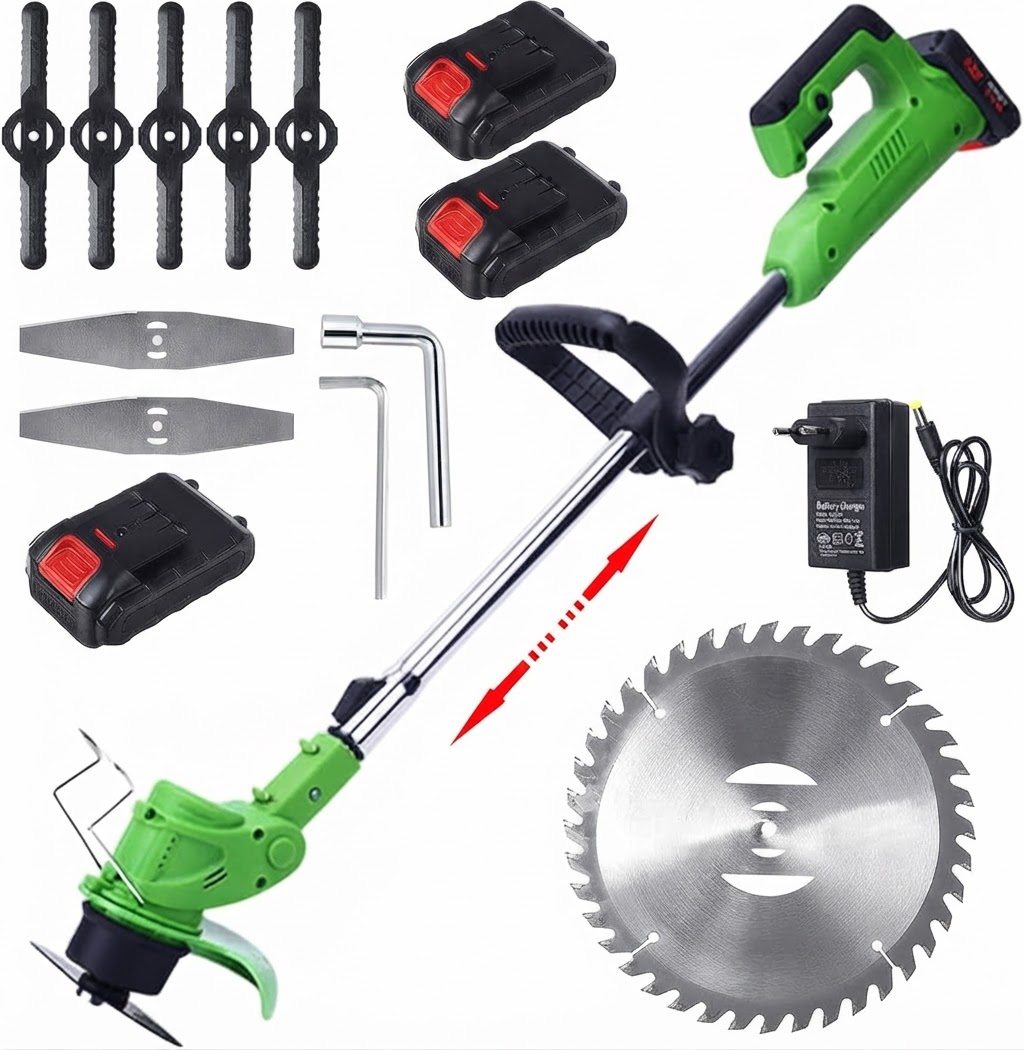
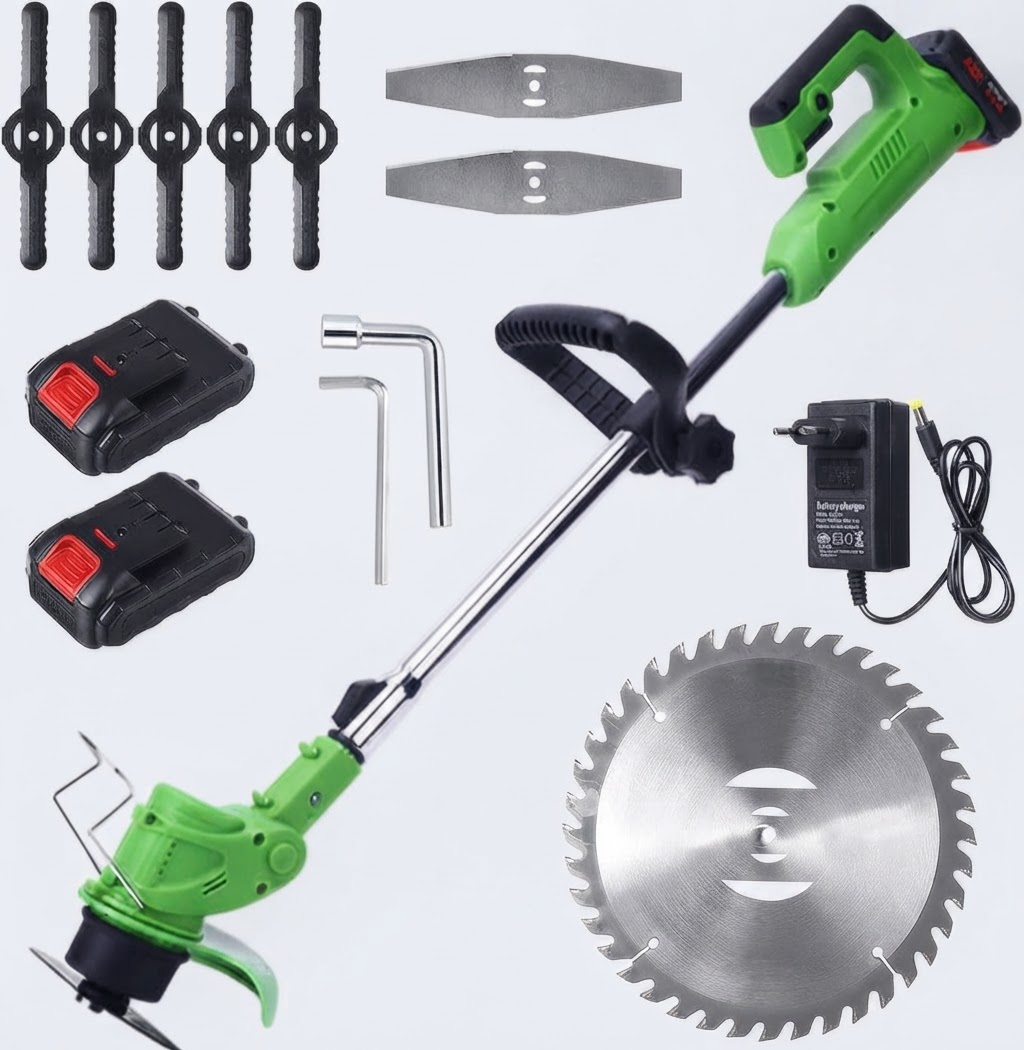
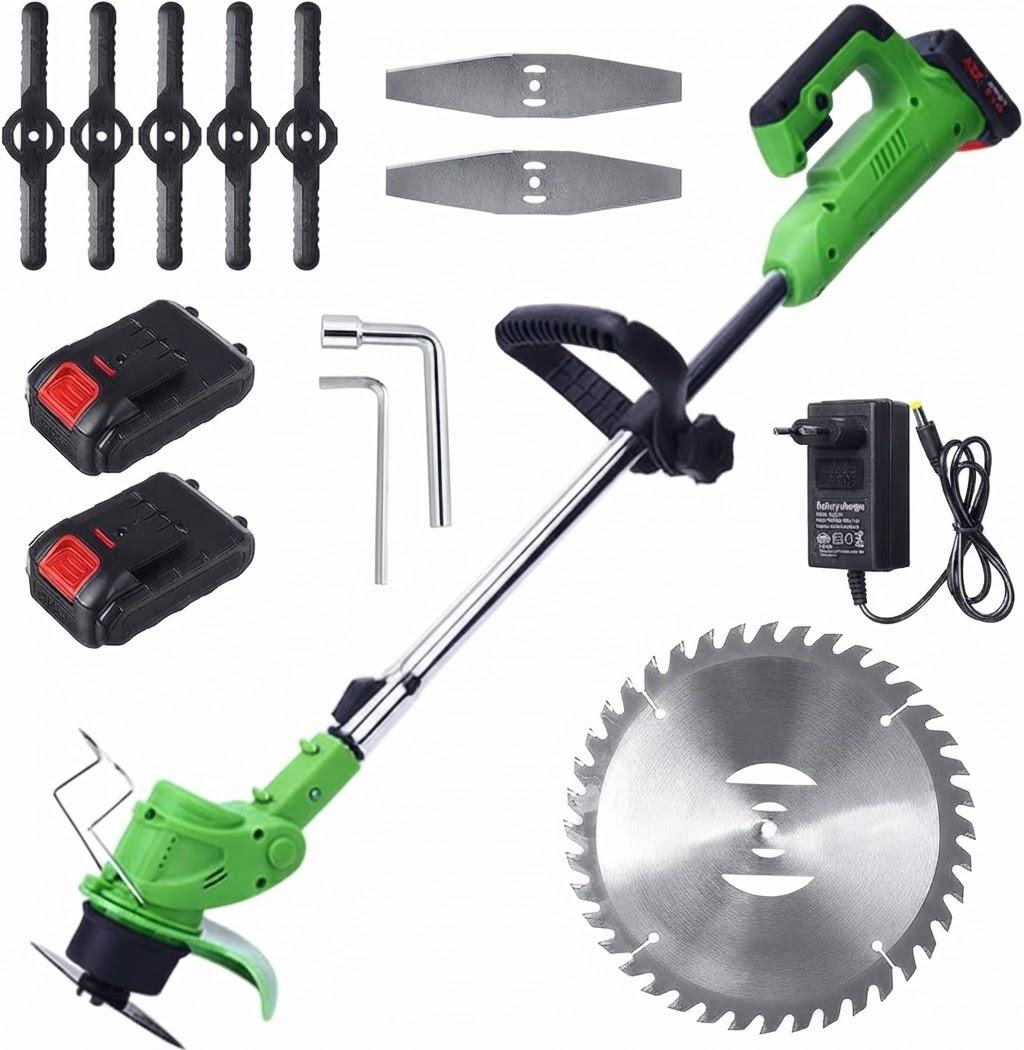
Key features typically found in modern string trimmers include lightweight designs and rapid spooling mechanisms. With products like the Cordless Grass Trimmer, users benefit from Cordless design for unrestricted movement and Adjustable handle for ergonomic comfort, making regular line trimming effort-free across standard lawns.
What Is a Brush Cutter?
A brush cutter is a robust machine equipped with metal blades or heavy-duty cutting heads designed to cut through dense thickets, woody weeds, small saplings, and overgrown brush. Brush cutters require high torque and strong power transmission systems to slice through dense woody stalks without stalling the motor.
Industrial brush cutters usually feature bike handles and shoulder harnesses to manage weight and vibration. However, residential hybrid models now offer brush-cutting performance in lighter form factors, utilizing high-torque powerplants like a 21V 650W high-power motor to power through tough growth.
Key Differences: Power, Cutting Heads, and Terrain
To better understand the difference between brush cutter and trimmer options, consider these primary operational factors:
Benefits of Versatile 3-in-1 Cordless Systems
Instead of purchasing separate machines, modern multi-functional tools combine these operations into a single unit. A system featuring 3-in-1 functionality: Trimmer, Edger, and Mower allows users to switch between clearing thick brush, edging driveways, and mowing flat patches.
Powered by efficient battery packs such as Includes two 2000mAh rechargeable batteries, cordless multi-tools provide continuous operation without requiring mixed fuel or limiting mobility with extension cords. The inclusion of 21V 650W high-power motor ensures that even battery-operated models deliver sufficient force to clear thick weed patches.
How to Choose the Right Tool for Your Lawn
When evaluating your yard care strategy, consider the type of vegetation present:
- Choose a grass trimmer if your main task is maintaining manicured borders after lawn mowing.
- Choose a brush cutter if you need to clear untamed areas, woody stalks, or dense patches exceeding 0.5 inches in diameter.
- Choose a hybrid cordless tool like the Cordless Grass Trimmer if your property requires both fine border control and brush clearing power.
Related in this cluster
- What Is a Brush Cutter Used For? Vegetation and Capability Guide
- 3-in-1 Lawn Care Tools: Grass Trimmer, Edger, and Cutter Compared
- How to Convert Your Cordless Grass Trimmer to Lawn Edger Mode
- Tired of Weak Trimmers? Why 21V 650W Cordless Power Changes Everything
- Cordless Grass Trimmer and Brush Cutter FAQ: Answers to Common Questions
- 6 Must-Have Ergonomic Features in Modern Grass Trimmers